Working out which appliance is worth buying
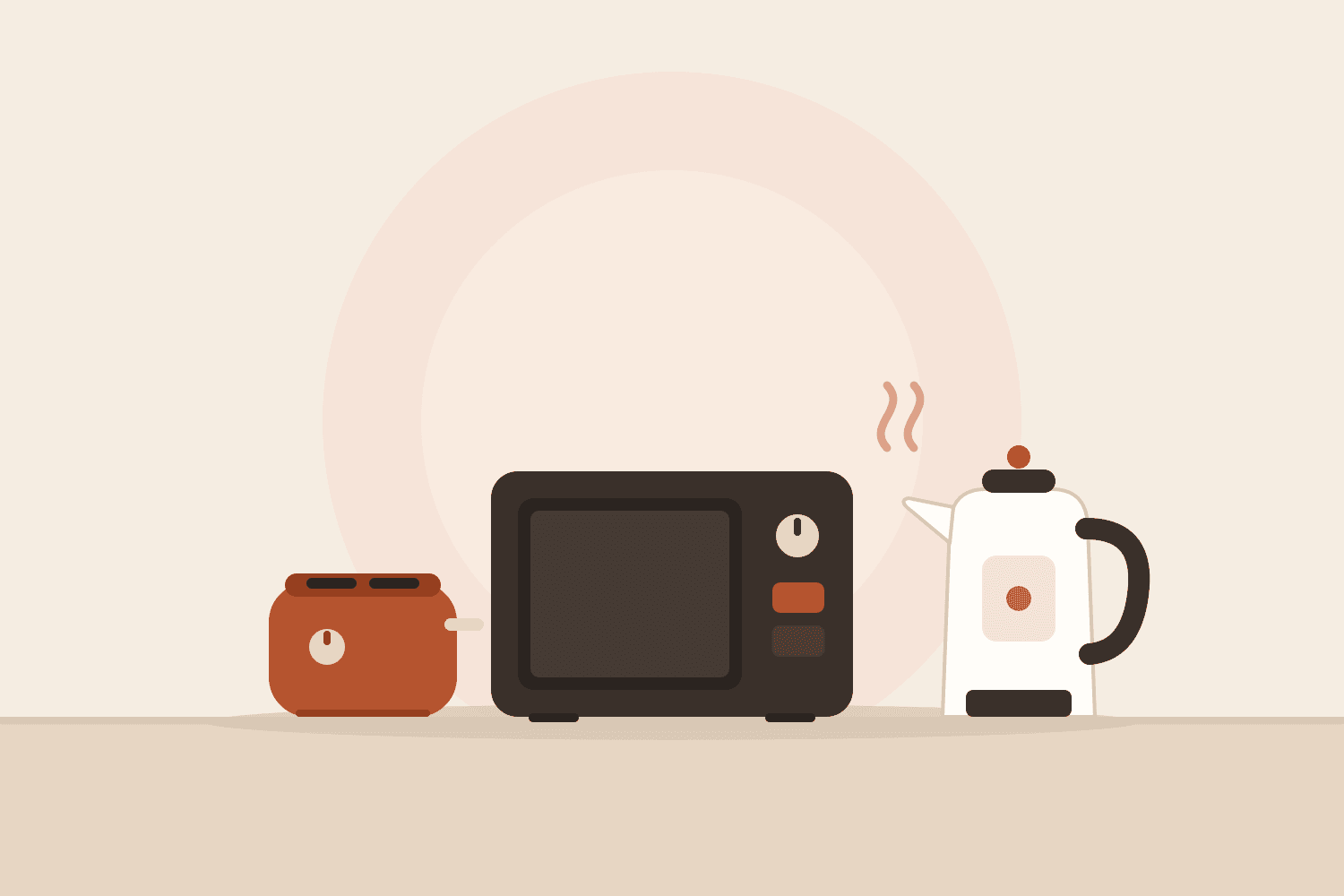
Start with what you cook in a typical week, not with the appliance. If most of your cooking is reheating and quick snacks, a microwave or a small air fryer may cover it. If you often cook for a crowd, the oven you already own may be the better-value option. The Energy Saving Trust makes the same point about running costs: air fryers are often cheaper than an electric oven for the same small meal, while an oven can be better value for batch cooking.
A useful test is whether a new appliance will replace something or just add to the clutter. One you would use several times a week earns its worktop space. One you would use once a month may not.
Countertop space and cupboard clearance
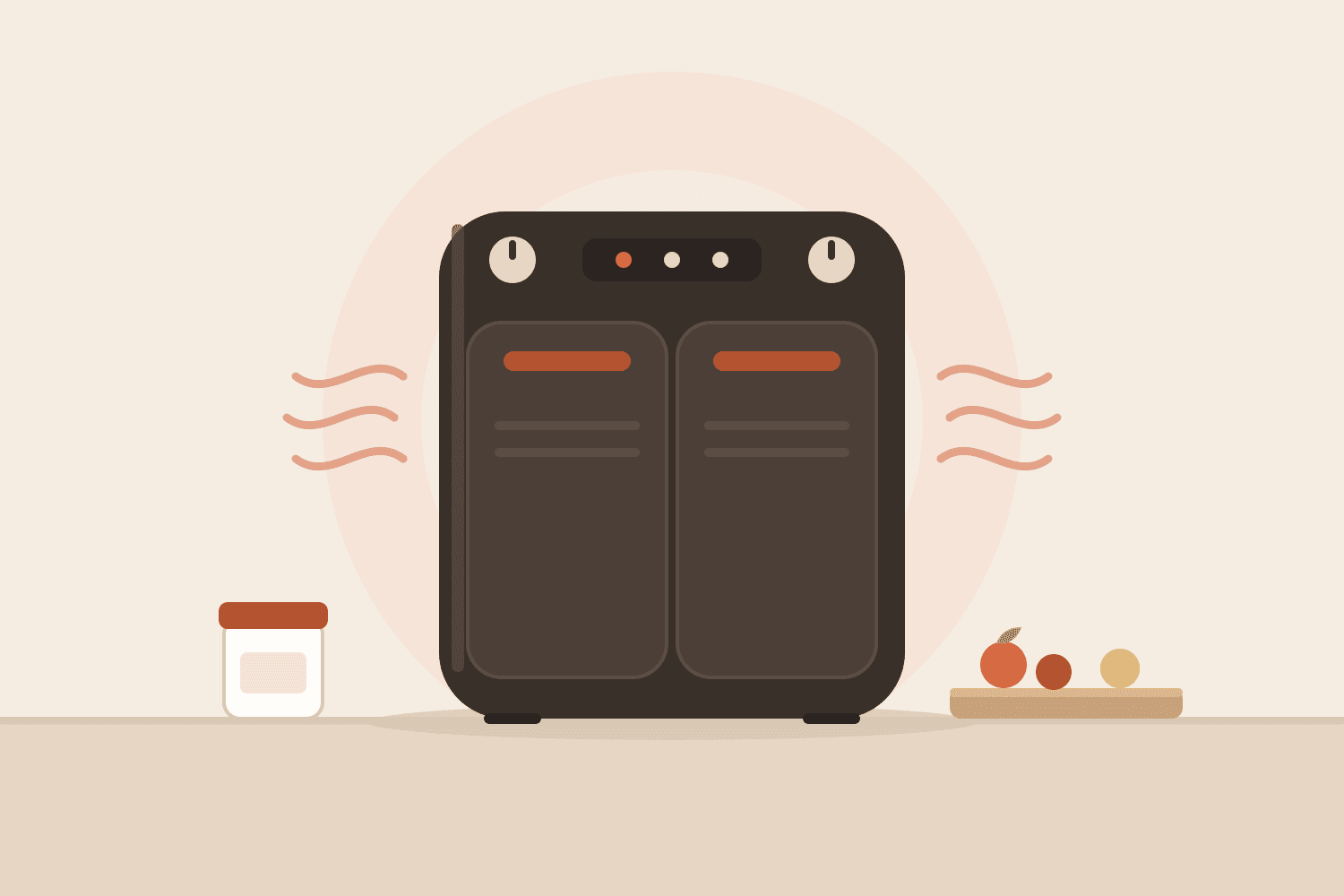
Measure the space before you compare features: width, depth and height, including the gap under any wall cupboard. Then add the clearance the manufacturer asks for. Tefal’s manuals for the two air fryers we researched ask for at least 15 cm of free space around the appliance and say not to put it in a corner or under a wall cupboard. Hot air and steam vent from many appliances, so the listed dimensions are not the whole picture.
Check the cable too. The air fryers we researched have short cords, around 0.8 to 0.9 m, so the socket needs to be close. Think about where the appliance lives between uses: if it has to be lifted out of a cupboard each time, you may use it less.
Choosing capacity for how you actually cook
Think about the largest single item you cook and how many things you want ready together, rather than how many people live in the house. A couple who batch-cook for the week may need more capacity than a family that mostly reheats.
Bigger is not automatically better. A large appliance takes more space and can be harder to wash. The Energy Saving Trust also notes that a typical electric oven can be the most expensive appliance to run for individual portions, because its size means more to heat. Choose capacity for the meals you cook most and accept that the occasional large meal may need two batches.
Usable area, not just litres
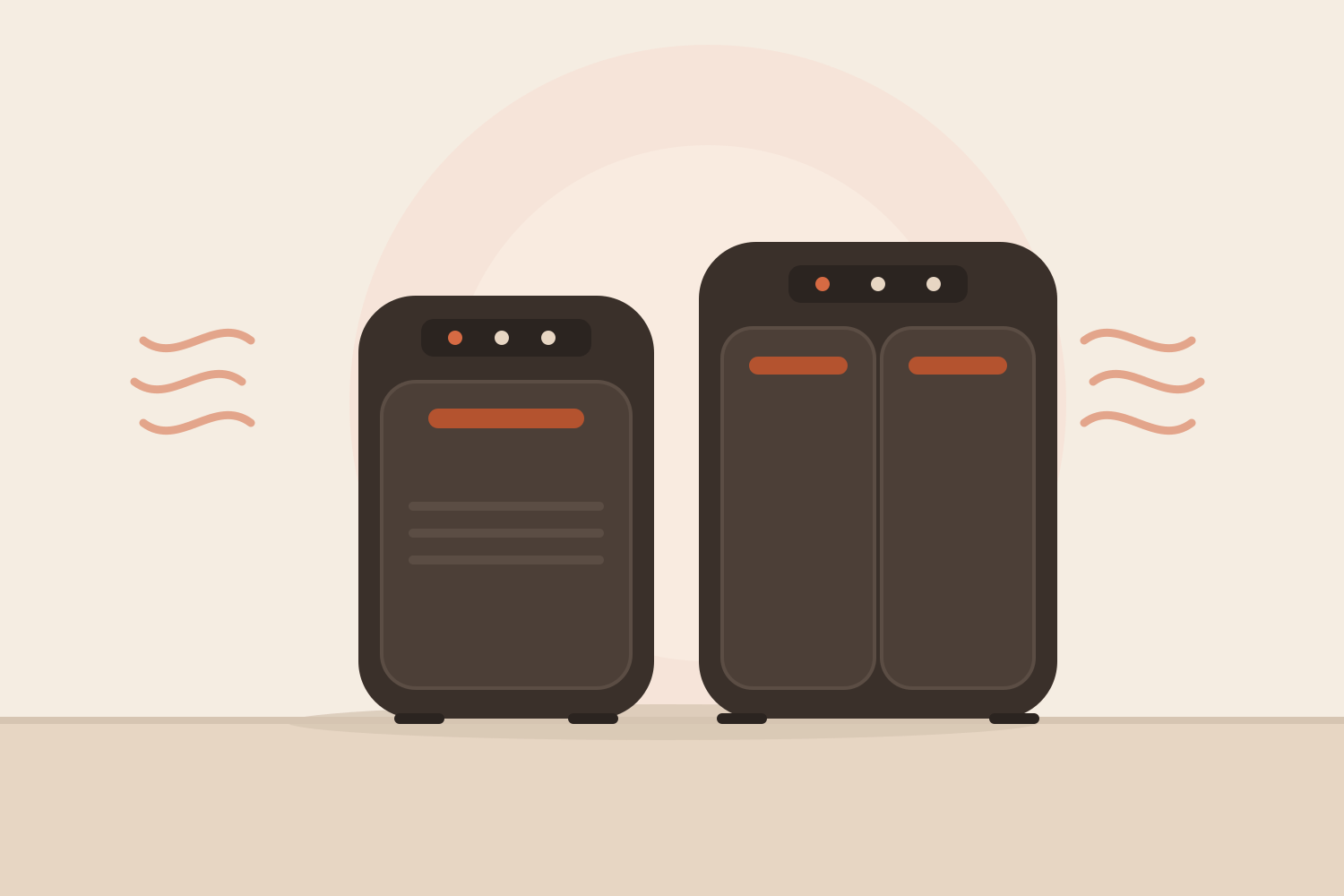
Litres measure volume. For cooking, what usually matters is how much food fits in a single layer, because heat or hot air has to reach each piece. A tall, narrow container and a wide, shallow one can have the same litre figure and very different usable areas.
Where an appliance has more than one compartment, the headline figure may be a total. An air fryer with two drawers quoted at 9.5 L is two drawers sharing that total, not one 9.5 L space. A manufacturer’s stated maximum load, such as a weight of fries or the largest dish that fits, is usually the more practical measure, and we quote those where a manufacturer gives them.
Cleaning and maintenance
Cleaning decides whether you keep using an appliance. Check which parts come out, which are dishwasher safe and which must be washed by hand. This can differ even within one brand: Tefal’s manual for one of its air fryers says the drawers and grids are dishwasher safe, while its manual for an oven-style model says the included accessories are not.
Follow the manual on coatings. Non-stick surfaces are normally damaged by metal utensils and abrasive pads. Electrical Safety First advises letting an air fryer cool fully before cleaning it, suggesting at least 30 minutes, and not putting it in water apart from any parts the manufacturer recommends.
UK electrical safety
Electrical Safety First says electric air fryers must be fitted with a UK 3-pin plug and fuse, and recommends buying from a reputable retailer rather than an unknown third-party seller, because a product from some sellers may not have passed the necessary safety checks. The same sensible checks apply to other mains appliances.
Look at the plug and socket regularly for burn or scorch marks, and stop using the appliance and get advice if you notice burn marks, buzzing or crackling, blowing fuses or tripping circuit breakers. Do not overfill it, never leave it running unattended, and follow the manufacturer’s instructions. An RCD protects you from electric shock if a product is faulty; Electrical Safety First suggests an RCD plug if your consumer unit does not have RCD protection.
Register your appliance with the manufacturer so you can be contacted if there is a safety recall. Shopicks has not checked the recall status of the products it mentions, so check before you buy.
Understanding advertised power ratings
Power is quoted in watts and is the most the appliance can draw, not what a meal uses. The air fryers we researched are rated between 1,800 W and 2,700 W. A higher rating can mean faster heating, but it does not tell you how long your food takes or what it costs to cook.
To turn a rating into an upper limit, multiply kilowatts by hours at full power: 2 kW for half an hour is at most 1 kWh. Most appliances use less, because they cycle on and off to hold a temperature. Multiply by the unit rate on your own bill for a ceiling. It is not a measurement, and we do not quote tariffs because they change.
A UK plug normally carries a 13 amp fuse, which at mains voltage is a little under 3 kW, so high-powered appliances sit close to the limit of a single socket. Check the manual, and avoid running several high-powered appliances from one socket.
Interpreting energy-efficiency claims
Treat percentage savings with care. Claims such as ‘save up to 65% on your energy bill’ compare one appliance with a conventional oven under the manufacturer’s own conditions, and the footnotes show how narrow those can be. Ninja’s air fryer page bases its figure on sausages cooked with the air fry function against conventional ovens, and Tefal’s oven-style page bases its 70% figure on 700 g of French fries against a Tefal convection oven.
Those can be fair results for those conditions, but they do not tell you what you would save cooking your own meals. The Energy Saving Trust’s advice is more useful: the cheapest appliance depends on what and how much you cook. Air fryers are often cheaper than an electric oven for small meals, an oven can be better for batches, and a microwave is likely to cost less per use than many other cooking appliances.
A smaller appliance or a multi-function one?
A multi-function appliance, such as an oven-style air fryer that also grills, bakes and toasts, can replace several gadgets in a small kitchen. The trade-offs are size, more parts to wash and, for some models, accessories that must be hand-washed. A simpler appliance is easier to clean and store but does fewer jobs.
Choose multi-function if you will really use the extra modes and have the room. Choose simple if you want one job done well and a clear worktop. Your cooking habits matter more than the length of the feature list.