Home & Living
Oil-Filled Radiator vs Fan Heater: Which Suits Your Room?
How an oil-filled radiator and a fan heater differ in warm-up, retained heat, noise, hot surfaces, positioning and running cost, and which suits which room.
A portable heater turns electricity into heat wherever you plug it in, so the real choices are how the warmth reaches you, how long you need it for and what the maker asks you not to do. This guide covers the two main types, the arithmetic behind running cost and the safety rules that matter most.
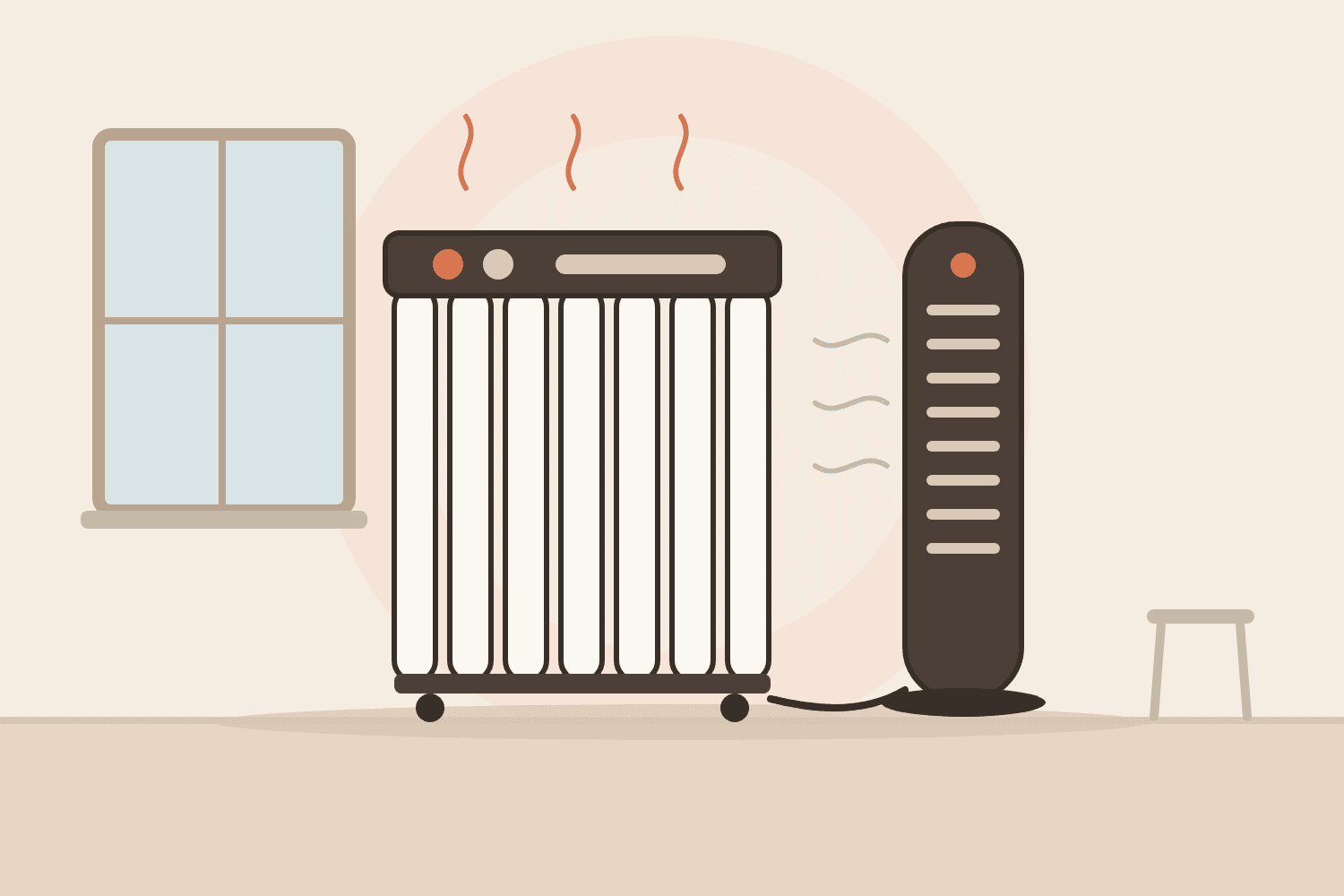
Most people reach for a portable heater for the same reason: one room is colder than the rest and they are going to be in it for a while. A home office on a north wall, a living room that central heating never quite warms, a spare room used a few evenings a week. The two kinds worth weighing up are the oil-filled radiator, which warms the room slowly and keeps giving out heat after it is switched off, and the ceramic fan heater, which Which? says gets going much more quickly but can be noisy.
Four things decide whether a heater suits you. How does the warmth reach you, and does that suit the room? How much electricity does it draw while it is on, and for how long will you run it? Which controls will you actually use? And can you follow the safety rules in its manual? The room matters as much as any model: a well insulated box room and a draughty extension are very different jobs, and every one of the twelve heaters in our listing carries a caution that it is only suitable for well insulated spaces or occasional use.
Shopicks has not tested any heater, and nothing here is a measured result. The figures come from maker pages and manuals, from Which?, Electrical Safety First and Ofgem, and from the Amazon.co.uk listings each model was matched to, all read on 25 October 2026. Four examples below show how the types differ and our listing has all twelve. The separate comparison sets the two technologies side by side, and this guide is the place to start if you have not yet decided what to buy.
Oil-filled, dials and a 24 hour timer
Pro Breeze
A 2500 W oil-filled radiator controlled by dials, with a mechanical timer. It is the example of a type whose manual spells out its distances, its two levels of overheat protection and its rules on sleeping and unattended use.
Research-based assessment
Our assessment is based on product specifications, manufacturer information, market research and comparison with competing products. We have not physically tested this product.
A room you are sitting in, for someone who wants dials and a built-in timer and will read the manual first.
Amazon.co.uk’s Part Number row reads PB-H02-UK, which matches the manual’s model and Pro Breeze’s SKU. The manual is detailed about distances and unattended use. The three sources disagree about the wattage of each setting, which is why the card shows where each figure comes from. We have not tested its heating.
Oil-filled, digital panel, no manual found
De'Longhi
A 2000 W oil-filled radiator with an LED panel and a 0.5 to 24 hour timer. It is the example of a heater whose maker page lists the controls but whose placement and unattended-use rules we could not read.
Research-based assessment
Our assessment is based on product specifications, manufacturer information, market research and comparison with competing products. We have not physically tested this product.
Someone who wants digital control and will rely on the manual in the box for distances and unattended-use rules.
Amazon.co.uk’s Model Number and Part Number rows both read TRRS0920E.G, which is De’Longhi’s code, and the maker’s fiche confirms the 2.000 kW nominal output. De’Longhi’s English manuals page could not be read, so the safety wording on the card is limited to what the product page says. We have not tested its heating.
Ceramic fan, tower, oscillating
Pro Breeze
A compact ceramic tower with oscillation and a dial thermostat. It is the example of a fan heater that warms the space around you, with a manual that lists its settings and its tip-over and overheat protection.
Research-based assessment
Our assessment is based on product specifications, manufacturer information, market research and comparison with competing products. We have not physically tested this product.
Warming a small room you are about to use, for someone who will be there while it runs and can keep the clearances in its manual.
Amazon.co.uk’s Model Number row reads PB-H07-UK-FBA and its Part Number row PB-H07-UK, which Pro Breeze’s UK manual and page match. The manual’s Ecodesign table says the heater has no fan-assisted output, which cannot be right for a fan heater, so that table is not used. We have not tested its heating.
Ceramic fan, compact, oscillating
Pro Breeze
A small ceramic fan heater with two power levels and oscillation. It is the example of a compact heater for short spells of warmth while you are in the room, and of how a small body can still draw 2000 W.
Research-based assessment
Our assessment is based on product specifications, manufacturer information, market research and comparison with competing products. We have not physically tested this product.
A small room, for short periods while you are in it and with the clearances in its manual kept clear.
Amazon.co.uk’s Part Number row reads PB-H01-UK and its title says Oscillation Mode, which matches this model and not Pro Breeze’s separate three-setting mini heater. The manual is a multilingual EU edition and its English section was read. We have not tested its heating.
| Pro Breeze PB-H02 (oil-filled) | De’Longhi TRRS0920E.G (oil-filled) | Pro Breeze PB-H07 (ceramic tower) | Pro Breeze PB-H01 (ceramic mini) | |
|---|---|---|---|---|
| Rated input | 2500 W | 2000 W | 2000 W | 2000 W |
| Heat settings | Three, wattages disputed between sources | Three, 900 W to 2000 W | 1000 W or 2000 W, with or without oscillation | 1200 W or 2000 W, with or without oscillation |
| Thermostat | Dial | Room and safety thermostats, electronic | Dial | Dial |
| Timer | 24 hour dial | 0.5 to 24 hours on a panel | None described | None described |
| Fan or oscillation | No fan | No fan listed | Fan, 80 degree oscillation on the page | Fan, 60 degree oscillation on the page |
| Tip-over protection | Listed on the page, not in the English manual text | Not on the page | Manual | Manual |
| Clearances | 50 cm on all sides, 0.9 m from combustibles | Not read | 50 cm on all sides, 1 m on the radiating side | 50 cm on all sides, 1 m on the radiating side |
| Sleeping and unattended use | Not while sleeping, never unattended | Not read | Not while sleeping, never unattended | Not while sleeping, never unattended |
| Weight | 11.7 kg (manual) | 12.03 kg (page) | 2.35 kg (manual) | 1.89 kg (page) |
| Manual read | Yes, English section of an EU manual | No English manual found | Yes, UK manual | Yes, English section of an EU manual |
A fan heater passes air over a heated element and blows it into the room. In a ceramic fan heater the element is made of ceramic, which is a choice of element and not a separate class of efficiency: every one of these heaters turns the electricity it uses into heat. All five fan heaters in our listing are ceramic, so we group them that way, and we do not claim that a ceramic element uses less electricity than another kind. Where a maker says it does, the claim has no test conditions printed and we do not repeat it.
An oil-filled radiator has a sealed body of thermal oil that an element heats, and its fins give the warmth to the room. It has no fan in any model we list. Electrical Safety First says oil-filled radiators take longer to warm up and keep giving out heat after switch-off, and Which? says its testers typically got about half an hour more of heating after switching an oil-filled heater off before the temperature began to drop. That stored warmth is real, and it is not free: the electricity was used while the heater was on.
Two further types fall outside this guide. Oil-free radiators are a different design from oil-filled ones, and we do not count them as the same thing, though Which? says they work in the same way. Convector heaters are a third type that Which? tests separately. Neither is in our listing yet.
A fan heater is the one to think about when you want warmth soon in a small room you are about to use, with the distances in its manual kept clear of furniture, bedding and curtains. The air it blows is what you feel, and the heater stops giving out heat soon after it switches off. A radiator warms more gently from a large surface, takes longer to make a difference and leaves a room feeling warm for longer once the heater stops. Which? found that its oil-filled heaters heated its test room more slowly than fan and convector models.
Noise differs in the way you would expect. A fan makes some, and a radiator mostly does not, although the Pro Breeze PB-H02 and VonHaus manuals both say that crackling or popping when the heater is first switched on is normal. Makers print decibel figures for some fan heaters (Pro Breeze quotes 49 dB for the tower and 57 dB for the mini heater, and De’Longhi 45 to 48 dB for the Capsule You&Me), but none prints the distance or the setting, so the figures cannot be compared with each other. If you will be on video calls, check a fan heater’s sound in a shop or ask a seller before you commit.
Every heater has a rated input in watts. The radiators in our listing run from 1500 W to 2500 W, and the fan heaters are all 2000 W on their highest setting and 1000 W or 1200 W on low. A thousand watts is a kilowatt (kW), and a kilowatt-hour (kWh) is what a 1 kW appliance uses in an hour. Your bill charges you per kWh, so the sum is the rated input in kilowatts, times the hours it runs, times your unit rate.
A higher number does not mean a warmer room or a more efficient heater. It means more electricity drawn while the heater is on. The difference between a 1500 W and a 2500 W radiator is how fast it can put heat into the room and how much it draws while it does. How warm the room gets depends on the insulation, the draughts, the weather outside and what else is heating it.
Ofgem lists an average electricity unit rate of 26.32p per kWh for 1 October to 31 December 2026, on its Great Britain Direct Debit price cap basis, and says there is no VAT on electricity from 1 October 2026 to 31 March 2027. That is not a universal tariff. Your region, payment method or a fixed deal will give a different rate, so replace the figure with the one on your bill. Your daily standing charge is separate: it is charged whether or not a heater is on, so running one does not add a new standing charge.
The table holds each heater at its rated input for the whole time. At that rate a 2000 W heater uses 2 kWh in an hour, which is 53p at 26.32p per kWh, and a 2500 W heater uses 2.5 kWh, which is 66p. These are sums, not measurements. They are not a household bill and they are not a ceiling, because a thermostat switches the heating on and off, a heater may be on a lower setting, and a fan or control board draws a little power of its own.
Cycling is the reason real use can differ. If a 2000 W heater’s thermostat kept it switched on for 40 minutes of every hour, it would draw about 1.33 kWh in that hour, or 35p. We have no way of knowing how often any of these heaters cycles in your room. Which? measured it for the models it tested: it reported that oil-filled radiators averaged 33p an hour against 60p for fan heaters and 48p for convectors, at the 25.73p per kWh it used, and that the 11 fan heaters in its latest test cost anything from 8p to 80p an hour at full blast, at 26.32p per kWh. Those are averages and ranges for particular models in Which?’s test room, not a rule for every heater.
| Energy in 1 hour | Cost for 30 minutes | Cost for 1 hour | Cost for 2 hours | |
|---|---|---|---|---|
| 1000 W | 1 kWh | 13p | 26p | 53p |
| 1200 W | 1.2 kWh | 16p | 32p | 63p |
| 1500 W | 1.5 kWh | 20p | 39p | 79p |
| 2000 W | 2 kWh | 26p | 53p | £1.05 |
| 2500 W | 2.5 kWh | 33p | 66p | £1.32 |
Makers’ room sizes are claims, and they are not in the same unit. Pro Breeze says up to 30 m2 for its 2500 W radiators and up to 15 m2 for its fan heaters. De’Longhi gives a working capacity in cubic metres, 60 m3 for its 2000 W radiators and 45 m3 for the 1500 W one. A 60 m3 room has a floor area of 25 m2 if the ceiling is 2.4 m high, but that is our arithmetic and De’Longhi does not say it. None of these figures promises a temperature.
A heater only makes up for the heat the room is losing. Single glazing, gaps round doors and windows, an uninsulated wall and an open door to a cold hall all work against it, and the 12 heaters we list carry the same caution that they are only suitable for well insulated spaces or occasional use. Which? says that heating a medium-sized room takes roughly 30 minutes to an hour, that a heater suits short bursts in one small area and that over a full day central heating is probably the better choice. It also says a thermostat saves money because the heater cycles on and off, and that a smart meter is the only reliable way to compare a heater’s cost with your central heating.
For a home office, the question is how long you will be there and how much open space you can leave around the heater. A compact fan heater warms you quickly for a short spell, and the Pro Breeze mini heater is 18.5 x 15.5 x 26 cm. It still draws up to 2000 W, its manual asks for 1 m around the heat radiator side, and it should not be left running when you leave the room. An oil-filled radiator takes longer to make a difference and may suit a longer, supervised spell of work, but it must stand in an open spot, with at least one metre clear of the desk, chairs, papers, curtains and anything else that could burn. Electrical Safety First gives one metre from combustible items, and where a maker asks for more, use the larger distance. A radiator pushed under a desk or into a corner cannot meet that, and the manuals still say never to leave one unattended.
For a bedroom, think about warming the room before you go in and switching the heater off and unplugging it when you settle down. Every manual we read that covers the point says not to use the heater while sleeping or to leave it unattended, and Electrical Safety First says never to leave a heater running while you are asleep. A thermostat or a timer is not a reason to ignore that. The timers on these heaters switch them on and off, and they do not remove the risk of fire.
For a living room you are in all evening, an oil-filled radiator is the steadier choice and a fan heater the quicker one. Weight matters if you will move it: the radiators in our listing run from 6.9 kg to 14.36 kg and the fan heaters from 1.3 kg to 2.36 kg on the makers’ pages. Where children or pets are about, remember that Electrical Safety First says tip-overs are easily caused by them and that the fins of an oil-filled radiator stay hot after use.
Most of these heaters have a thermostat, and the difference is whether it is a dial or a digital panel. Which? notes that cheaper heaters often have dial thermostats with no degree markings and says these are rarely entirely accurate, so expect to find a setting by trial. A digital panel lets you set a figure in degrees, which the De’Longhi Radia S and Pro Breeze OmniWarm do. Neither guarantees that the room will reach that temperature, which depends on the heater’s output and the room’s heat loss.
A built-in timer switches the heater on and off at set times. Five of the seven radiators in our listing have one and only one fan heater page lists one. A built-in timer is not a licence to add a plug-in one: the Pro Breeze and Russell Hobbs manuals say not to use the heater with an external programmer or timer switch. Remote controls, Eco modes and frost protection are listed on some models. Which? says frost protection only works if the heater is left on standby, which sits awkwardly with the rule against leaving heaters unattended, so read the manual before relying on it.
Every maker we could read tells you to avoid an extension lead, and Electrical Safety First says not to power a heater from one because they are easily overloaded. A short cable pushes people towards a lead, so check the length before you buy. Pro Breeze’s pages give 139 cm for the PB-H07, 150 cm for the radiators, 170 cm for the PB-H01, and VonHaus gives 1.5 m. De’Longhi and Russell Hobbs print no cable length in the papers we read. Put the heater near a wall socket, not under it: the Pro Breeze manuals say not to place it directly below one.
Keep the cable away from the heater’s hot surfaces, do not run it under a rug and do not leave it coiled. The Russell Hobbs manual says the power cord must be completely unwrapped when the radiator is in use, and the Pro Breeze manuals say not to wrap the cord around the appliance. Radiators have castors, and several need the wheel assemblies fitting before first use, so allow time for that. The Pro Breeze and Russell Hobbs manuals say to unplug the heater and let it cool before moving or cleaning it.
Electrical Safety First’s advice is short and specific. Put the heater on a level surface where it is unlikely to be knocked over, keep it at least one metre from anything that could burn, such as furniture, curtains and paper, and keep fan heaters well away from bedding. Do not dry clothes on or near it. Do not use an extension lead. Never leave a heater running unattended or while you are asleep. Keep the vents of a fan heater clear of dust.
Manufacturers may ask for more or something different, and where a manual is specific it overrides a general rule. The Pro Breeze manuals ask for 50 cm clear on all sides, with 1 m recommended on the radiating side of its fan heaters and OmniWarm, and combustible items at least 0.9 m away. The Russell Hobbs manual gives 100 cm, 90 cm and 15 cm in different places. VonHaus prints no distance. Where distances differ, use the larger one. Hot surfaces can burn children and pets, and the fins of an oil-filled radiator stay hot for a while after use.
Cut-outs help and they do not make a heater safe to ignore. A tip-over switch stops the element if the heater falls, and overheat protection stops it if it gets too hot, but neither removes the risk of fire, and neither is a reason to leave a heater running when you are out or asleep. Shopicks does not recommend running any portable heater overnight or unattended.
Electrical Safety First lists the signs to watch for: burn marks, arcing (buzzing or crackling), blown fuses, a tripped circuit breaker and a product that is hot to the touch. If you see one, unplug the heater and contact the retailer, the maker or a qualified repair technician. It also recommends an RCD, either in your consumer unit or as an RCD plug, and says all portable heaters must have a UK 3-pin plug. Buy from a reputable retailer rather than an unknown third-party seller, avoid second-hand heaters and register the product with the maker so you can be told about a recall. Which? warns that some cheap heaters sold through online marketplaces could cause fires or shocks.
A marking on a heater or in its manual is the maker’s statement that it complies with the rules. Shopicks has not seen any heater’s test reports and does not claim that any model is independently certified or safe. We searched the government’s product safety alerts, reports and recalls list on 25 October 2026 for each of the twelve brands and models in our listing and found no entry for any, and we have not written that any product is free of faults or recalls. A recall can be issued at any time, so check the list for your own model after you buy.
Buying on wattage alone, as if a bigger number meant a warmer room, when the rating only tells you how much electricity is drawn. Assuming one technology is cheaper to run without knowing the hours, the settings or the room. Choosing a heater for a bedroom because it has a timer, when the manual says not to use it while sleeping. Ignoring the cable length and ending up with an extension lead. And trusting a room size from a listing without asking whether the room is well insulated.
The mistakes that matter most are about use. Putting a heater close to curtains or bedding, drying washing on it, covering it, leaving it running in an empty room and using a damaged plug or cable. If you cannot watch a heater while it runs, a portable heater is the wrong tool. A well insulated room, a draught excluder and the heating you already have may do more than a second heat source.
The cards in our listing mark what the makers’ papers leave out. We could not find an English manual for any of the six De’Longhi heaters, so their distances and unattended-use rules were not read, and the Pro Breeze PB-H02 manual does not describe the tip-over switch its own page lists. VonHaus prints no clearance distance and Russell Hobbs gives three different ones. The Russell Hobbs manual’s Ecodesign table gives a heat output that does not match its 2500 W rating, so we do not use it.
A line that says the information was not specified means exactly that. It does not mean the feature is missing, and it does not mean it is present. When you buy, read the manual that comes with the heater and treat it as the authority on that model.
Our assessment is based on product specifications, manufacturer information, market research and comparison with competing products. The products on this page have not been physically tested by Shopicks.
If it drew 2 kW for a whole hour at Ofgem’s 26.32p per kWh average rate for 1 October to 31 December 2026, it would use 2 kWh and cost 53p. It would cost less if the thermostat switched it off for part of the hour or it ran on a lower setting. Use your own unit rate for a better figure.
Not because of the technology alone. While both are switched on, a heater uses the electricity its rating says. Which? found oil-filled radiators averaged less per hour than fan heaters in its tests, but those are averages for its models. Our comparison explains what can make real consumption differ.
There is no universal answer. Makers give room sizes as claims in different units, and what a heater achieves depends on your insulation, draughts and the weather. Start with the manual’s distances, then choose a rating you are comfortable drawing while you are in the room.
Not because of the element type alone. A ceramic element is a way of making heat and every heater here turns the electricity it uses into heat. Some makers claim savings and print no test conditions, so we do not repeat them.
No. Electrical Safety First says never to leave a heater running unattended or while you are asleep, and the manuals we could read say not to use the heater while sleeping or to leave it unattended. A timer or thermostat does not change that.
Electrical Safety First says not to, because extension leads are easily overloaded. The Pro Breeze, Russell Hobbs and VonHaus manuals all advise against one. Plug the heater straight into a wall socket.
Amazon only permits prices, ratings and review counts to be shown from its own site or API, and a stale value would mislead you. Each button links to the Amazon.co.uk listing, where you can see the current price, availability and customer reviews.
Placement, one metre from combustible items, extension leads, drying clothes, unattended and sleeping use, how oil-filled radiators behave, warning signs, RCDs, the UK plug and buying from a reputable retailer. The page shows no date.
Average cost per hour for oil-filled, fan and convector heaters at 25.73p per kWh, warm-up speed and heat after switch-off. The page is dated 25 September 2026. Model scores are behind a paywall and are not used.
How cost per hour is measured, the range of costs at 26.32p per kWh, thermostat accuracy, frost protection and the marketplace safety warning. The page is dated 16 October 2026. Model results are behind a paywall and are not used.
Fan heaters against oil-filled and convector heaters, and that portable heaters are not designed to heat a whole home. The article also quotes older unit rates, which are not used here.
The average electricity unit rate of 26.32p per kWh for 1 October to 31 December 2026 on Ofgem’s Great Britain Direct Debit basis, and the note that there is no VAT on electricity from 1 October 2026 to 31 March 2027. The page shows no date.
Searched by brand, model code and ASIN for each listed heater. No entry names any of them. The search covers the list’s own text only.
Rated input, settings, controls, clearances and unattended-use wording are from the makers’ pages, fiche and manuals recorded in the portable heater evidence dataset.
Used only to confirm the title, manufacturer and model number behind each ASIN. No Amazon prices, ratings, images or descriptions are used.
Home & Living
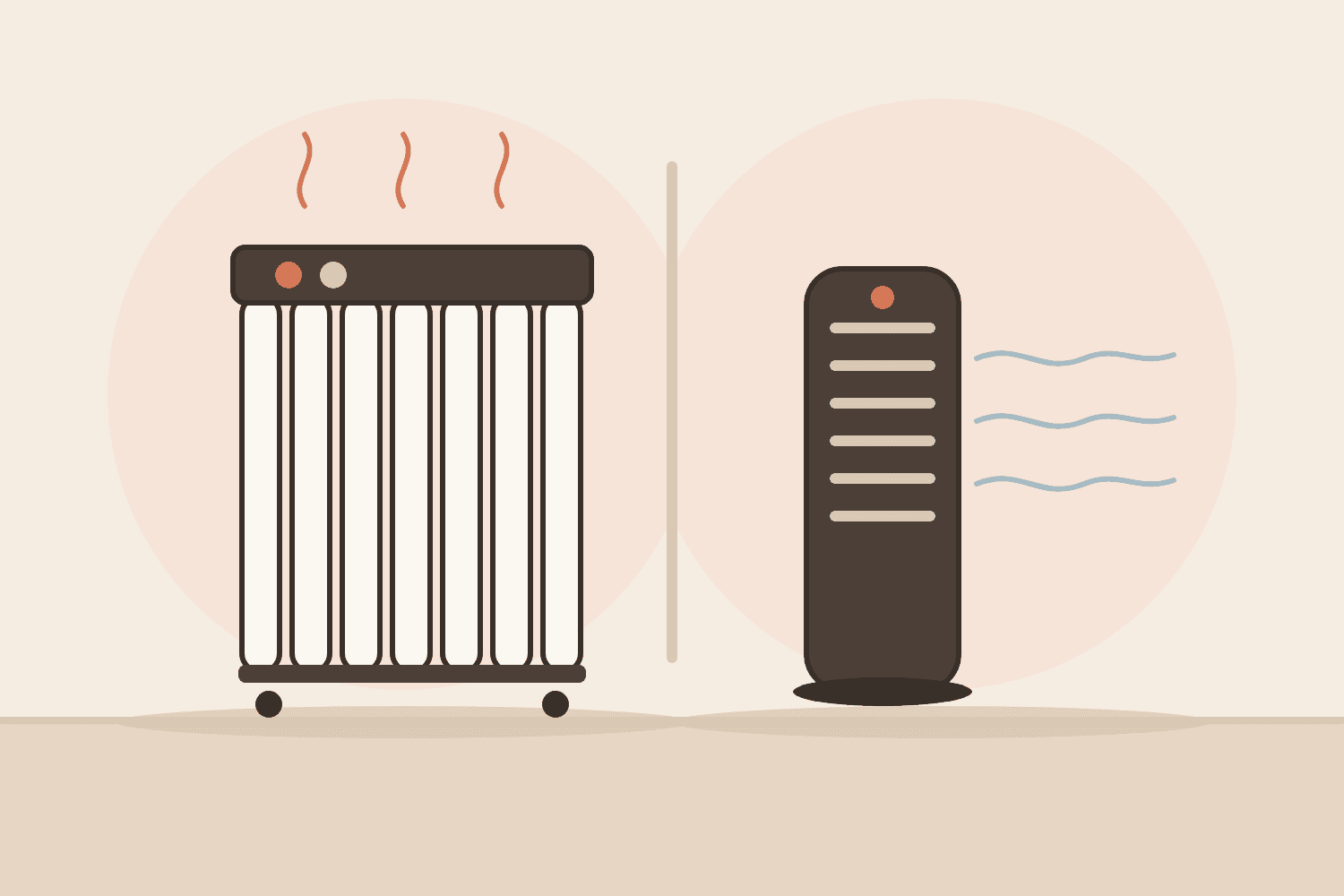
How an oil-filled radiator and a fan heater differ in warm-up, retained heat, noise, hot surfaces, positioning and running cost, and which suits which room.
Home & Living
How to choose a heated clothes airer in the UK: winged, tiered, pod and cabinet types, what capacity figures count, space, electricity arithmetic and safety limits.

Home & Living
Why window condensation forms, what to try before a dehumidifier, when one helps and when it does not, and what renters can ask a landlord, with GOV.UK advice.