Home & Living
Compressor vs Desiccant Dehumidifier: Which Suits Your Room?
How compressor and desiccant dehumidifiers differ in room temperature, rated extraction, power, weight, noise and upkeep, using maker figures.
A dehumidifier does not heat your washing, it gives the moisture somewhere to go. This guide covers where to put the machine and the airer, what laundry settings do, what the manuals say about clearance and unattended use, and how the energy use compares.
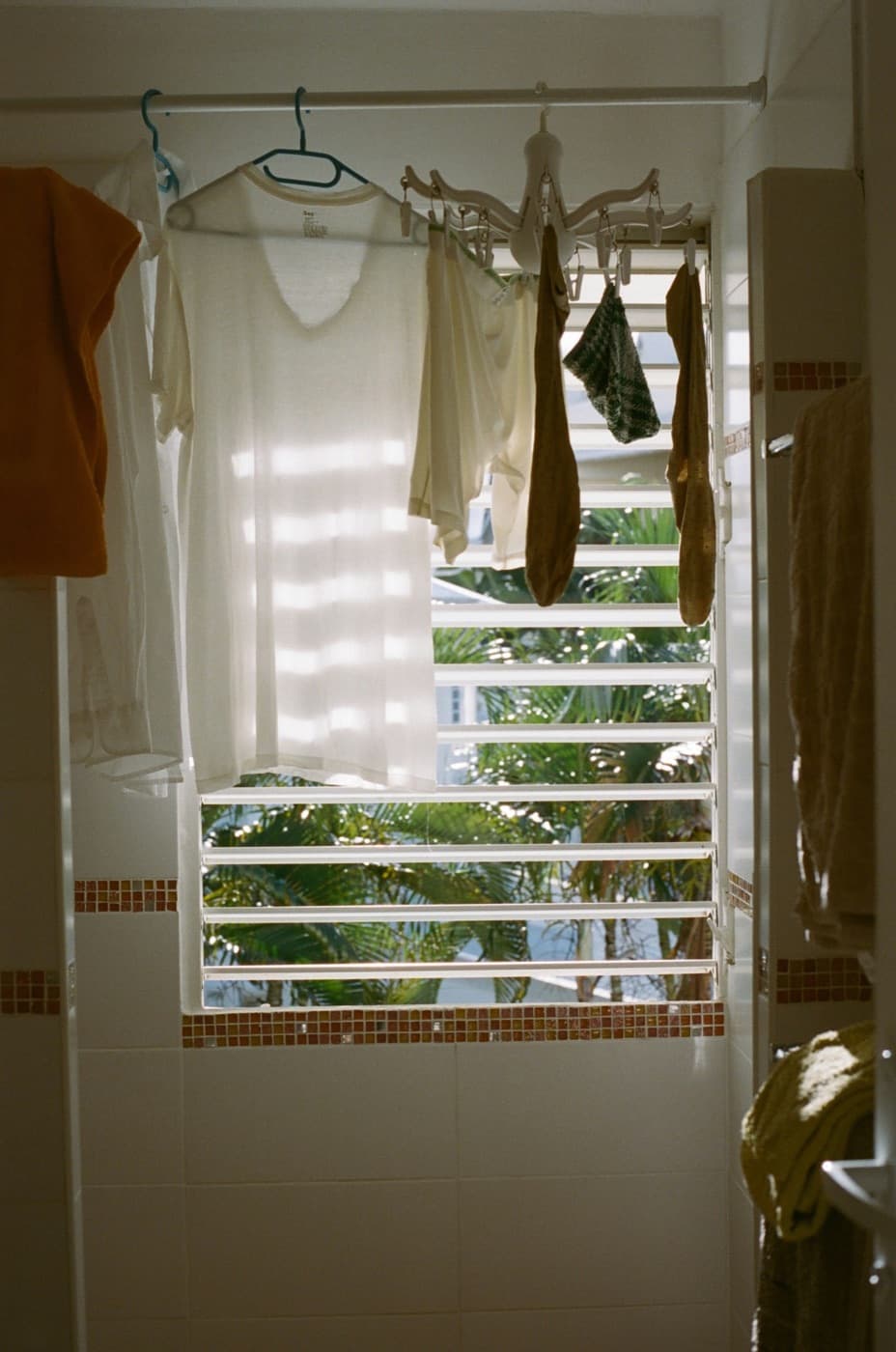
By the time a wet load is dry, a lot of water has left the clothes, and every drop has to go somewhere. A dehumidifier does not dry clothes by heating them. It lowers the humidity of the air around them, so the water that evaporates from the fabric is collected in the tank and does not settle on windows and walls. In its own test, Which? found that using a dehumidifier almost halved the drying time of two identical loads, and that it pulled around two litres of water from the air.
The catches are that Which? found a dehumidifier would cost more and take longer than the most cost-effective tumble dryers (energy-saving heat pump models), although the comparison depends on the load, the drying time and the type of dryer, and a dehumidifier also lowers the moisture a wet load puts into the room’s air. It is not a heater, and it needs the right room: small, closed, warm enough and clear of the washing. This guide covers the set-up, the laundry settings the makers describe and the safety points in their manuals, then compares the approach with a heated airer and a tumble dryer using Which? research. It is different from our buying guide, which is about choosing the machine. Three models show how laundry settings differ.
Shopicks has not tested any dehumidifier or measured any drying time. The figures come from manufacturer manuals and pages and from published UK consumer and safety advice, all read on 25 October 2026, and the guide says where makers disagree or print no conditions.
Laundry mode with stated timings
Meaco
A desiccant model whose manual spells out what its laundry mode does: a target, a fan setting, a louvre position, a run time and a heater cycle. It is the clearest example of a laundry setting you can read.
Research-based assessment
Our assessment is based on product specifications, manufacturer information, market research and comparison with competing products. We have not physically tested this product.
A cool utility room or a small room where the washing hangs, for someone who wants the laundry mode described in detail.
Meaco’s page and manual agree on the extraction by fan speed, the tank, the temperature range and the laundry mode, and the Amazon.co.uk listing carries DD8L Pro in its Model Name and Model Number rows. The older Meaco DD8L Zambezi is a different product and is not used. The manual says the machine should sit close to laundry but not so close that water drips onto it. We have not tested its drying.
Laundry setting, 3.5 L tank
EcoAir
A larger desiccant model with a laundry position on its mode slider and a 3.5 L tank. It is the example of a simple, dial-based laundry setting with no stated timings.
Research-based assessment
Our assessment is based on product specifications, manufacturer information, market research and comparison with competing products. We have not physically tested this product.
A cool room where a larger tank means fewer trips to empty it, and a simple control suits.
EcoAir’s website SKU for the DD3 Simple is DD-100003, which matches the Model Number row on the Amazon.co.uk listing. EcoAir’s page names the Laundry setting but not its timings, so we say only that. We have not tested its drying, and did not read the clearance wording in its manual.
4 L tank, continuous laundry mode
Pro Breeze
A larger compressor model with a 4 L tank and a laundry mode that its manual describes as continuous running on a high fan. It is the example of a bigger tank for a heavy washing week.
Research-based assessment
Our assessment is based on product specifications, manufacturer information, market research and comparison with competing products. We have not physically tested this product.
A heated room with a lot of washing and somewhere to drain, for someone who wants a bigger tank and app control.
Pro Breeze’s page links the PB-D-24-WF-UK manual, and the Amazon.co.uk listing carries PB-D-24-WF-UK and PB-D-24-WF in its model rows. The manual is an image-only PDF and was read by optical character recognition, so its figures are less certain than a text PDF. We have not tested its drying.
| Meaco DD8L Pro | EcoAir DD3 Simple | Pro Breeze OmniDry 20L Smart | |
|---|---|---|---|
| Type | Desiccant | Desiccant | Compressor |
| Laundry setting | 35% RH, high fan, wide louvre, 6 hours; heater runs 4 hours then rests 30 minutes | Laundry position on the mode slider; no timings printed | Continuous laundry mode on high fan (manual) |
| Extraction as printed | 2.12, 5.4 and 7.97 L at 20°C and 60% RH on fan speeds 1 to 3 | 10 L at 20°C and 60% RH | 20 L, no conditions printed |
| Water tank | 2 L | 3.5 L | 4 L |
| Rated power | 231 W, 437 W, 623 W by fan speed | 420 W low, 670 W high | 330 W (manual) |
| Operating range | +1°C to +35°C | 1°C to 35°C | 5°C to 35°C (manual); 5°C to 32°C (page) |
| Continuous drainage | Option, hose not included | Not stated on the page | Option, two hoses included |
| Noise (no conditions printed) | 40, 47 and 50 dB by fan speed | 45/54 dB(A) | 36 dB (page) |
Wet clothes dry because their water evaporates into the air. If that air is already humid, evaporation slows and the moisture finds the coldest surface instead. GOV.UK lists drying laundry among the everyday activities that put moisture into the air and, if it cannot escape, lead to condensation, and Shelter says drying clothes indoors can make condensation worse. A dehumidifier works on the moisture after it has left the clothes, which is why Which? describes it as removing the moisture that evaporates into the air during drying.
Shelter’s advice is to dry clothes outside or in a tumble dryer if you can, and, if you have to dry them inside, to do so while opening windows or using a dehumidifier. This guide is for that second case.
Which? advises putting the dehumidifier close to where the clothes hang, setting everything up in a small room, and keeping doors and windows shut so the machine does not have to deal with damp air from outside. It also suggests an extra spin in the washing machine, to remove as much water as possible, and a fan on the opposite side of the room to the dehumidifier to move air across the washing.
Meaco’s ABC manual gives the same advice with more detail. Use as small a room as possible with all doors and windows closed, point the dry air at as large an area of washing as possible, arrange the washing so air can circulate around it, and use a pedestal fan if you have one. Some warmth in the room helps, it says, and it recommends continuous (CO) mode on the highest fan speed.
Every maker asks for space around the machine. Meaco asks for more than 20 cm on its ABC model, Pro Breeze for 50 cm behind the air outlet and 20 cm on the other sides, and EcoAir for 40 cm. Which? says most dehumidifiers should be at least 20 cm from walls or furniture, with the Meaco Arete One range an exception because it is designed to stand against a wall.
For laundry there is a second distance: between the machine and the washing. Which? says to place the dehumidifier close to the clothes but not so close that water might drip onto it or the clothes might slip off and fall onto it. EcoAir’s DC12 MK3 manual says never to place wet laundry over the appliance and to dry laundry on a rack at least 40 cm away. Water on an electrical appliance is a hazard, so treat those distances as minimums.
Which? says you can use any dehumidifier to dry laundry, that many laundry settings simply raise the power to maximum for a set time and that some are designed to save energy by optimising performance. Without a laundry setting it suggests a target of 30% to 40% and checking the clothes from time to time, so you do not leave the machine running longer than needed.
Makers differ. Meaco’s Arete One laundry mode targets 35% RH on high fan for 6 hours, and the compressor pauses at 32% RH and restarts at 38% RH so the air is not over-dried. The DD8L Pro targets 35% RH on high fan with a wide louvre for 6 hours, with the heater running for 4 hours then resting for 30 minutes. The Pro Breeze 20L Smart runs continuously on a high fan, and the EcoAir DD3 Simple has a Laundry position without stated timings. EcoAir’s DC12 MK3 manual says not to use its laundry mode for long periods or unattended. Meaco’s ABC 10L page lists a laundry mode, but its manual recommends continuous (CO) mode on the highest fan speed instead.
Which? says both types are available with a laundry setting, and that desiccant models work better in cold rooms and cost more to run. EcoAir says its desiccant models release slightly warm air, which helps drying, and Meaco’s DD8L Pro includes a heater cycle in its laundry mode. A compressor suits a heated room, where Electrical Safety First says it is generally more energy efficient.
Which? puts a model of 18 L or more in its large band, a sensible choice for a lot of moisture such as laundry dried indoors, but ratings are measured under different conditions and tank size is a separate figure, so check both. Our comparison of compressor and desiccant types goes through the trade-offs in more detail.
Energy use is rated power in kilowatts multiplied by hours. As illustrations, the DD8L Pro drawing 623 W on its highest fan speed for 6 hours would use about 3.7 kWh, and drawing 231 W on its lowest about 1.4 kWh. A 165 W model such as the Meaco Arete One 12L would use about 1 kWh over the same 6 hours, and the Pro Breeze 20L Smart at 330 W about 2 kWh. These are constant-power scenarios from the makers’ printed wattages, not measurements or maximums: actual use varies with the mode, the room conditions and how the humidistat or laundry cycle switches parts on and off, and the figures say nothing about how long a given load takes to dry. Multiply kWh by your own unit rate to get a cost.
Which? measured drying time with and without a dehumidifier, and found it almost halved. On cost, Which? says that even the cheaper-to-run dehumidifiers it recommends would cost more and take longer than the most cost-effective tumble dryers, and that if you own a tumble dryer it is far more likely to be the cheaper option. That comparison is with energy-saving heat pump dryers, and Which? says vented and condenser dryers cost considerably more per load than heat pump ones, so it is not a verdict on every dryer. The result also depends on the size of the load and how long each method takes, and Which? adds that desiccant dehumidifiers are more expensive to run than refrigerant ones. Compare kWh per load, which needs your own timings, not watts.
Which? sets out the trade-offs. Tumble dryers are the fastest, from 14 to 40 minutes per kilogram in its tests, and the best choice for big loads, though vented and condenser models can be costly to run and a poorly made condenser can leak humid air. Heated airers draw typically 200 W to 300 W, take typically four to five hours for a small cotton load, are cheap to run with small loads and need ventilation because the moisture does not disappear. A dehumidifier lowers the risk of damp in the room, and has a tank to empty and a fan to hear.
Which?’s verdict on dehumidifiers is that they suit a home with damp or mould issues or poorly ventilated bathrooms, where adding indoor drying would make things worse, while a tumble dryer remains the better choice for large loads. Compare load size, how often you wash, the existing damp, the size of the room, the noise you will tolerate and the space to store the machine.
Electrical Safety First advises placing a dehumidifier where air can circulate freely, emptying the tank after each use and before moving it, keeping the cable tidy and out of reach of children and pets, keeping air inlets and outlets clear, and using a socket with RCD protection or an RCD plug. It says to avoid running a dehumidifier overnight or while you are away unless the maker says it is safe for unattended use.
Manuals add points of their own. Several say the R290 refrigerant is flammable and ask you to keep the unit away from ignition sources. EcoAir’s DC12 manual says not to use the laundry mode for long periods or unattended and to keep laundry at least 40 cm away. Meaco’s manual says to make sure water from the laundry cannot drip onto the dehumidifier. Read your own manual before relying on any setting overnight.
Shelter England says a landlord should not ban you from drying clothes indoors if you have no outside space, and could help with a solution such as a dryer or a dehumidifier. If the moisture from indoor drying is causing condensation or mould, tell the landlord in writing, as Shelter advises, and keep a record. Our guide on dehumidifiers and condensation sets out what to report and what a landlord should do.
Our assessment is based on product specifications, manufacturer information, market research and comparison with competing products. The products on this page have not been physically tested by Shopicks.
Yes. Which? says some dehumidifiers have a laundry setting but you can use any dehumidifier to dry laundry, and without one you can set the target to 30% to 40% and leave it to run. Check your manual for limits on long or unattended running.
Close to the washing in a small room with the doors and windows shut, but far enough away that water cannot drip onto it or clothes fall onto it. Makers ask for between 20 cm and 50 cm of clear space around the machine, and one asks for laundry to be at least 40 cm away.
Which? says that, compared with the most cost-effective tumble dryers (energy-saving heat pump models), a dehumidifier would cost more and take longer, and that if you already have a tumble dryer it is far more likely to be the cheaper option. The result depends on the load, the drying time and the type of dryer, and we have not measured any. A dehumidifier may suit you if you have no tumble dryer, or if you also want to lower the moisture in the room.
It depends on the load, the room and the machine, and we have not measured it. Which? found that a dehumidifier almost halved the drying time of two identical loads. Meaco’s laundry mode runs for 6 hours and then stops.
Only if the maker says so. Electrical Safety First advises avoiding running a dehumidifier overnight or while away unless the manufacturer specifies unattended use is safe, and EcoAir’s DC12 manual says not to use its laundry mode for long periods or unattended.
Amazon only permits prices, ratings and review counts to be shown from its own site or API, and a stale value would mislead you. Each button links to the Amazon.co.uk listing, where you can see the current price, availability and customer reviews.
The drying-time test, laundry settings, the 30% to 40% target and placement tips. Published 15 October 2026.
Tumble dryers, heated airers and dehumidifiers compared. Published 22 October 2026. Test results behind a paywall are not used.
Capacity bands, types and how to use a dehumidifier.
Placement, emptying, unattended use and RCD protection.
Drying laundry as a source of indoor moisture.
Drying clothes indoors and condensation. Last updated 27 October 2025 on the page.
Landlords and indoor drying where there is no outside space. Applies to England.
Laundry settings, clearances, power and noise are from the makers’ pages and manuals recorded in the Home & Living evidence dataset.
Used only to confirm the title, manufacturer and model number behind each ASIN. No Amazon prices, ratings, images or descriptions are used.
Home & Living
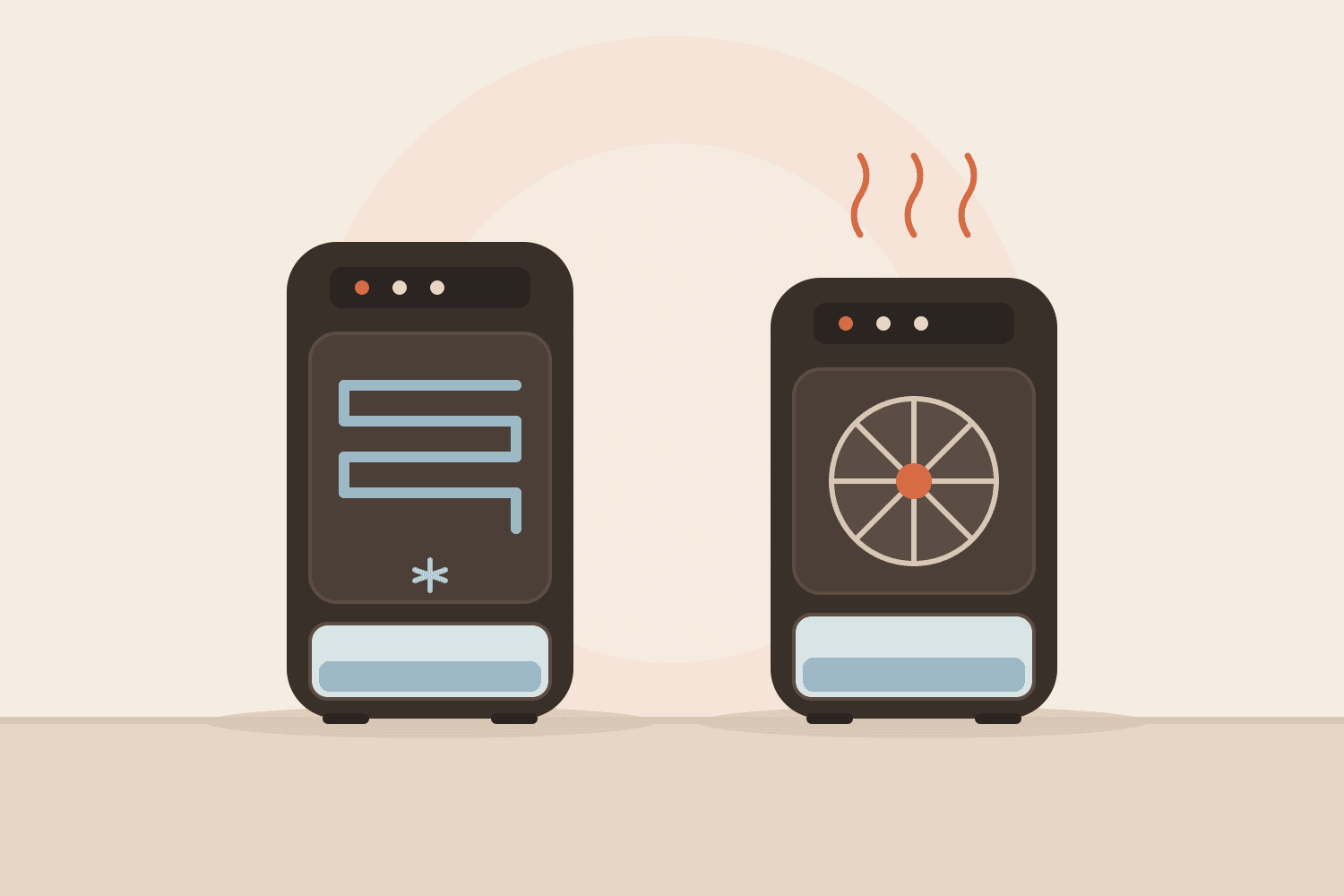
How compressor and desiccant dehumidifiers differ in room temperature, rated extraction, power, weight, noise and upkeep, using maker figures.
Home & Living
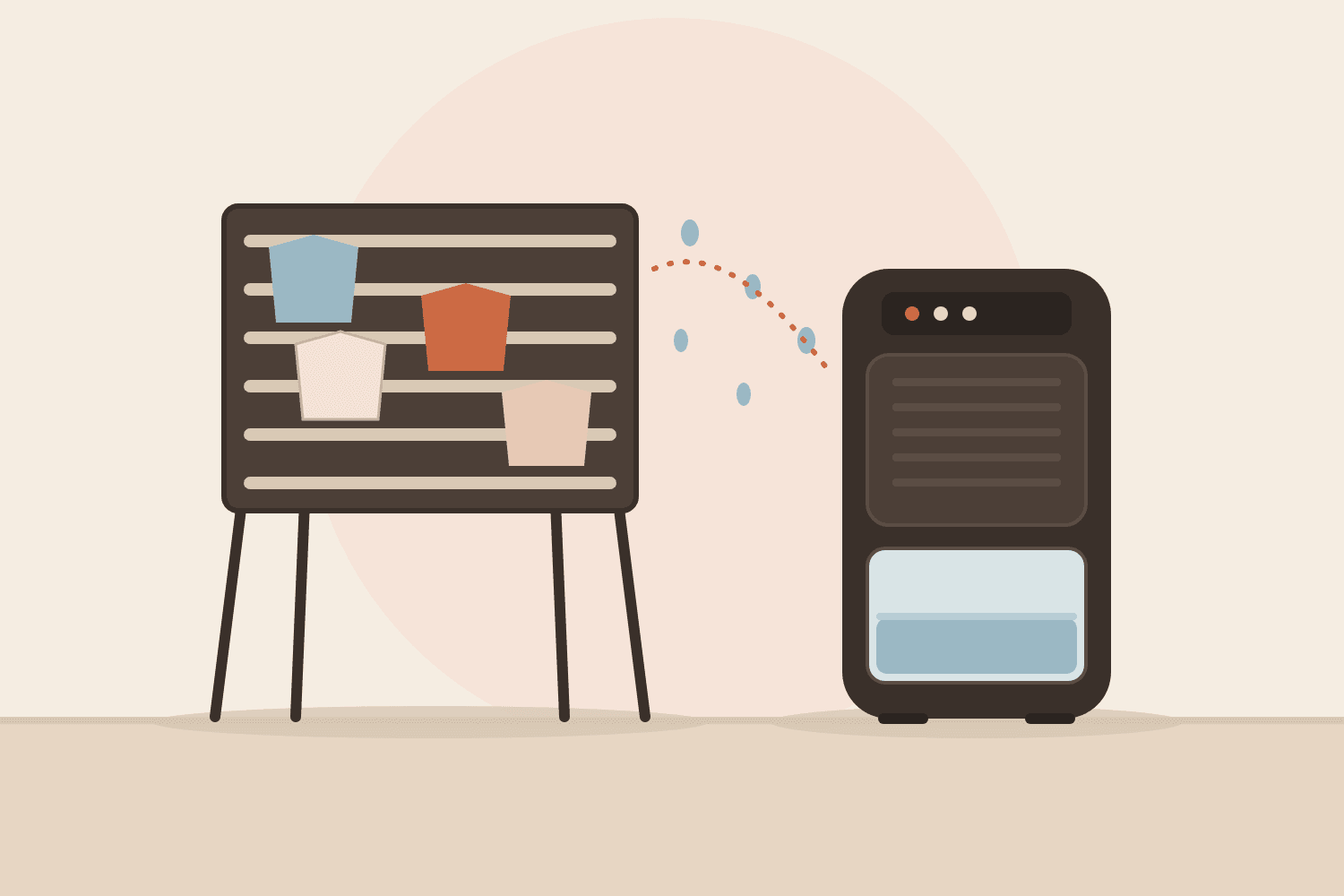
How a heated clothes airer and a dehumidifier each dry washing indoors: heat, airflow, where the moisture goes, power, noise, safety, and when using both makes sense.
Home & Living
How to choose a dehumidifier in the UK: compressor or desiccant, litres per day and test conditions, controls, tanks and noise, with five models checked.
Home & Living
Why window condensation forms, what to try before a dehumidifier, when one helps and when it does not, and what renters can ask a landlord, with GOV.UK advice.
Home & Living
How to choose a heated clothes airer in the UK: winged, tiered, pod and cabinet types, what capacity figures count, space, electricity arithmetic and safety limits.