Home & Living
Heated Clothes Airers for UK Homes: Types, Size, Power and Safety
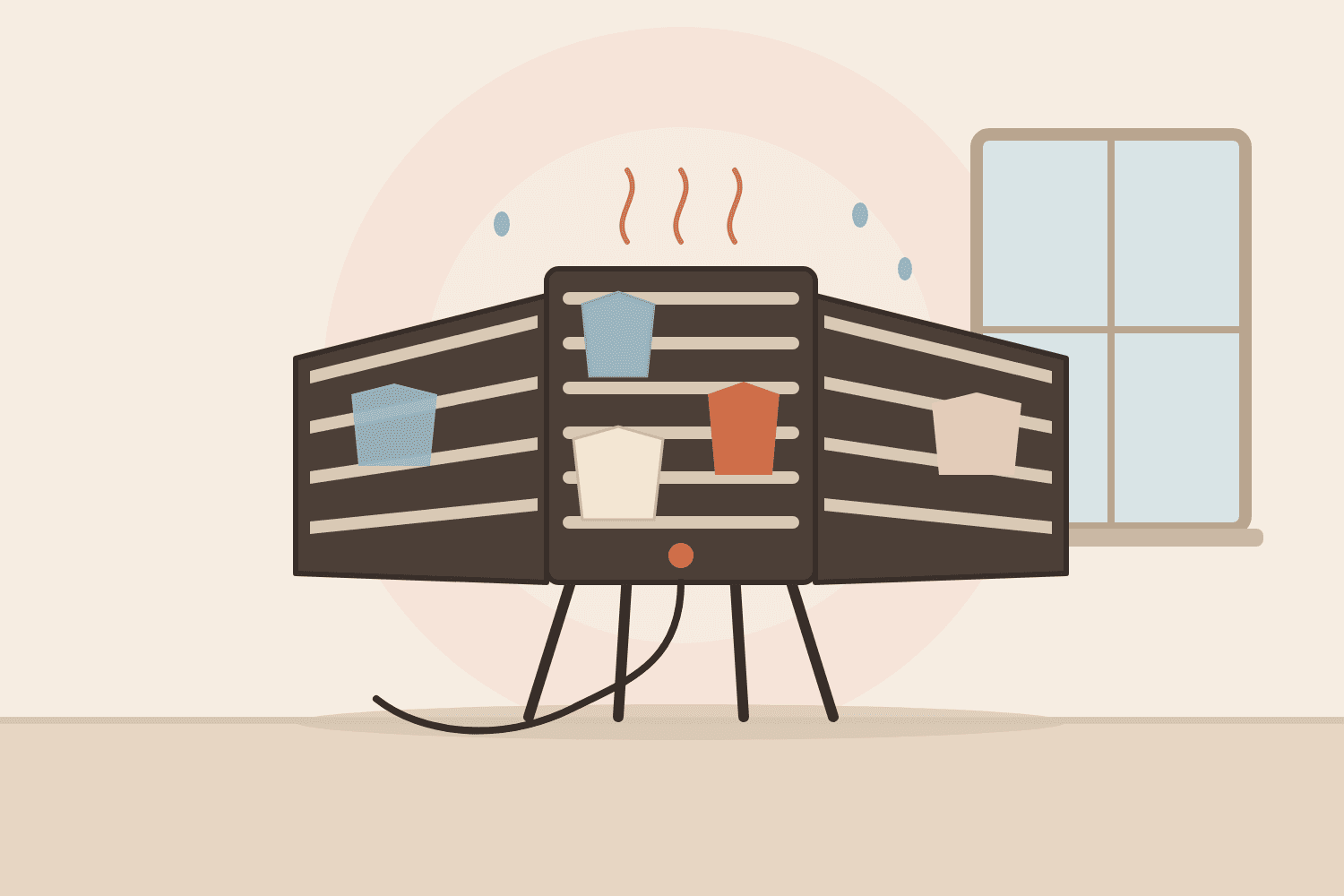
How to choose a heated clothes airer in the UK: winged, tiered, pod and cabinet types, what capacity figures count, space, electricity arithmetic and safety limits.
Home & LivingComparison
One warms the washing and the other dries the air. That difference decides which suits a small room, a damp home or a full load, and what each needs from you.
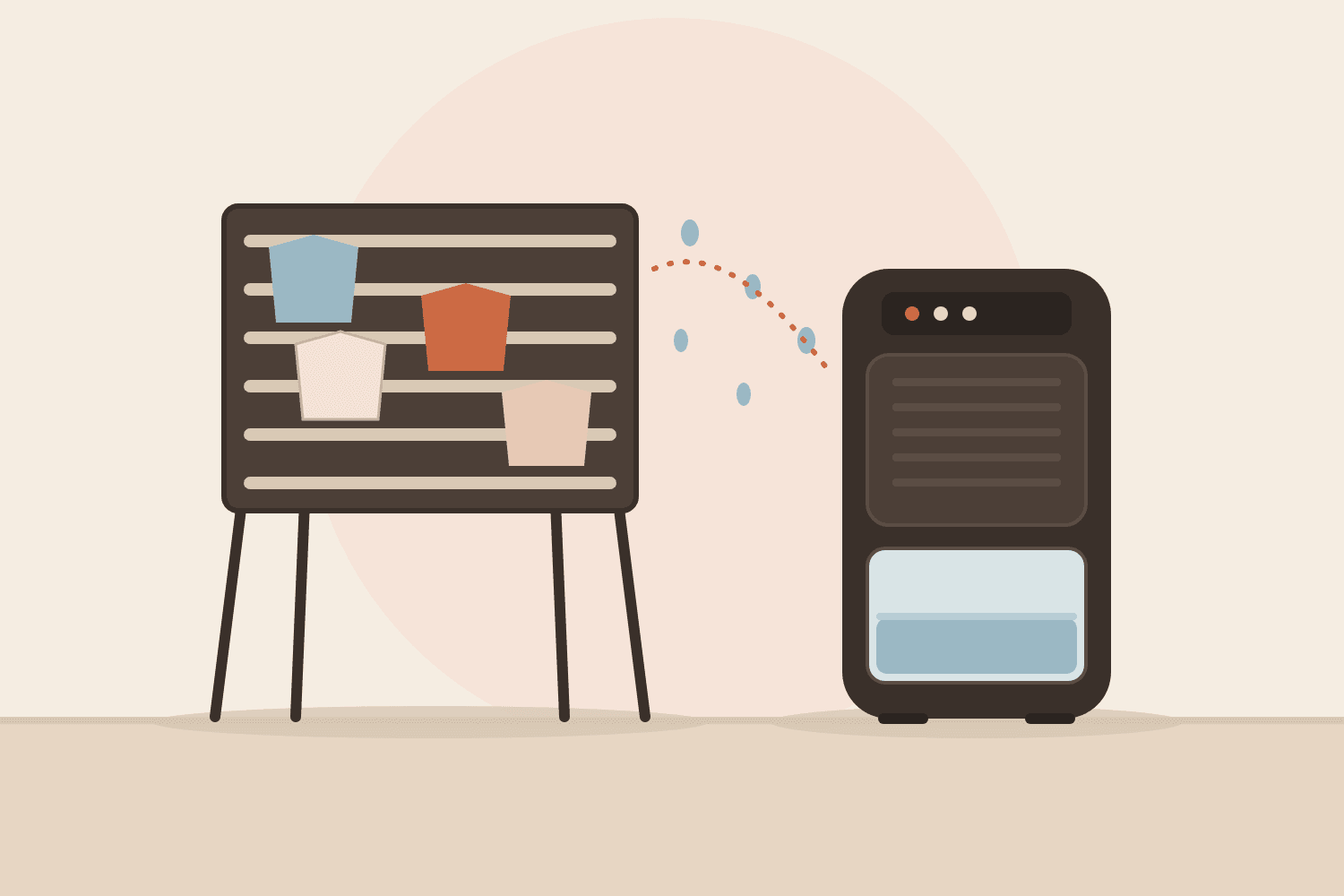
A rack with electrically heated bars, or a fan heater under a cover, that warms the laundry so its water evaporates into the room. Our listing has eleven, and the Beldray EH1156 is the worked example here.
A small to medium load of washing in a room where a window can be opened, for someone who has no tumble dryer.
Research-based assessment
Our assessment is based on product specifications, manufacturer information, market research and comparison with competing products. We have not physically tested this product.
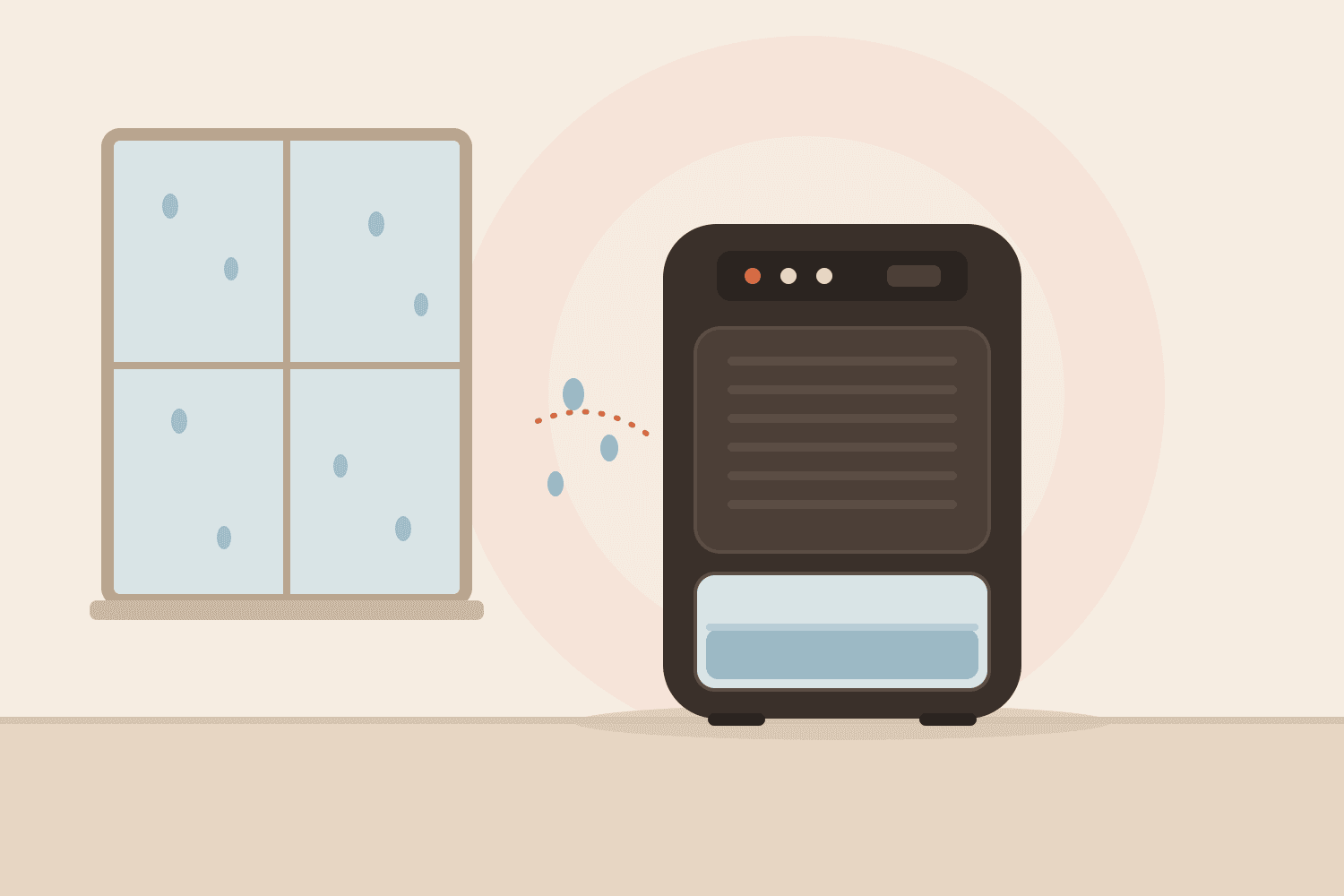
A mains appliance that draws damp room air through the unit and collects the water in a tank or drain. It does not heat your washing. Twelve are in our listing, and the compressor Meaco Arete One 12L is the worked example here.
A small closed room or a home with damp or condensation, where adding moisture to the air is the worry.
Research-based assessment
Our assessment is based on product specifications, manufacturer information, market research and comparison with competing products. We have not physically tested this product.
Wet laundry dries when its water turns to vapour and leaves into the air. A heated airer speeds that up by warming the clothes: heated bars warm the fabric they touch, and a pod or cabinet blows warm air up through clothes on hangers under a cover. A dehumidifier does not warm the washing. It lowers the humidity of the air around it, so vapour keeps leaving the fabric, and the machine collects the water.
That is why Which? describes a dehumidifier as removing the moisture that evaporates into the air as clothes dry, and why it says the airers it tested are not very effective at drying the parts of clothes that do not touch the bars. They are two different ways of helping the same evaporation.
A heated airer adds heat to the clothes and, in a pod or cabinet, moves the warm air. The bar models have no fan. Which? says heated airers do not noticeably heat a room and are not a replacement for your heating. A dehumidifier moves room air through itself. A desiccant model uses a heater to dry its wheel, and EcoAir says its desiccant models release slightly warm air, while Which? says compressors typically struggle in colder spaces. We have not measured any temperature.
Either way, air has to move across the washing. Which? advises a fan on the opposite side of the room to the dehumidifier to move air across the laundry, and Meaco’s manual says to arrange washing so air can circulate around it. The airer manuals ask for clear space too, for safety rather than airflow.
With a heated airer the water goes into the room as vapour. Which? says to avoid using one in a room with little or no air circulation, because the moisture often collects in the corners of ceilings and invites mould, and suggests opening a window, running a dehumidifier or using a window vac. GOV.UK lists drying laundry among the everyday activities that put moisture into the air.
With a dehumidifier the water goes into a tank, which the units in our listing hold from 1.5 L to 4 L, or into a hose if continuous drainage is fitted. Tank size is a separate figure from the litres per day rating, and a full tank switches the machine off. Neither appliance cures damp: if condensation or mould keeps returning, the cause needs finding, as our condensation guide explains.
A small, closed room is where the two advice sets point opposite ways. A dehumidifier is used with the doors and windows closed, and Which? says to set everything up in a small room so the machine does not have to deal with damp air from outside. A heated airer wants air circulation. In a flat with a window that opens, the airer in a ventilated room is workable. A dehumidifier is run with the windows shut, so it does not depend on air coming in from outside.
Space matters too. Our listing has a Dry:Soon Mini that folds to 8 cm deep and a winged airer that Benross lists as 142 cm wide open, and dehumidifiers that need 20 cm to 50 cm of clear space on each side. A renter should tell the landlord in writing about condensation, as Shelter advises, before buying either.
Energy in kilowatt-hours is rated power in watts, divided by 1,000, multiplied by the hours. The printed power in our listings is 198 W to 360 W for the heated-bar airers, 1000 W to 1200 W for the pods and cabinet, 165 W to 330 W for the compressor dehumidifiers that print it, and 231 W to 670 W by setting for the desiccant ones. Watts alone say nothing about cost, because the hours for a given load are what matter, and the two machines would not take the same time.
As an illustration with assumed hours, and no measurement behind it: a 230 W airer for 5 hours is 0.23 kW x 5 = 1.15 kWh. A 165 W compressor dehumidifier for 8 hours is 0.165 kW x 8 = 1.32 kWh, and a 330 W one for 8 hours is 2.64 kWh. Multiply any of those by your own unit rate to get a cost. The power is held constant, a thermostat or humidistat may switch parts on and off, and a dehumidifier’s laundry mode sets its own run time (Meaco’s Arete One runs its laundry mode for 6 hours). These are not running costs and not a ranking.
On cost, Which? gives no direct heated airer against dehumidifier comparison in its 22 October 2026 article. It says heated airers are relatively cheap to run for small loads, that drying pods cost more per hour, and that dehumidifier model results are behind its paywall. Which? also says, in the laundry research our dehumidifier laundry guide summarises, that a dehumidifier would cost more and take longer than the most cost-effective tumble dryers. We have not assumed an airer is cheaper than a dehumidifier or a tumble dryer.
A full load is where both struggle. A heated airer holds from about 10 kg to 30 kg on the frame in our listing, but Which? says the savings shrink dramatically for larger loads because the airer must be used several times. Beldray’s manual and Lakeland’s booklets also ask you not to overload the frame. A dehumidifier is sized by its extraction rating and its tank, and Which? puts models of 18 L or more in its large band, for a lot of moisture such as laundry dried indoors. The ratings are measured under different conditions by different makers, so the tank, the laundry mode and the clearances matter too.
If you do a lot of washing, Which? says a tumble dryer, particularly a heat pump model, is the better fit, and our laundry guide sets out the trade-offs. Which? says that if you already have a tumble dryer, the odds are it will be faster and, if you do a lot of washing, cheaper.
The bar airers have no fan and the makers print no noise figure, so we make no claim about them. The pod and cabinet have a fan, and Lakeland says the Drying Pod runs below 52 decibels, a statement with no conditions that we do not treat as a result. Dehumidifier noise in our listing runs from 34 dB to 54 dB with no maker printing the distance or the setting, so the figures cannot be ranked.
Placement differs. An airer needs open space, a room you can air and the distances in its manual: Beldray asks for 1 metre from furniture and curtains and a lowest heated rail at least 600 mm above the floor. A dehumidifier needs clear space around it, and its manual may say to keep laundry away so water cannot drip onto it. EcoAir’s DC12 manual says to keep laundry at least 40 cm from the unit.
Both are mains appliances with hot or electrical risks. Heated airers have hot bars or a hot fan, and the manuals prohibit unattended or overnight use (Beldray) or ask for a switch-off after 24 hours (Lakeland). Electrical Safety First advises avoiding running a dehumidifier overnight or while you are away unless the manufacturer says it is safe, keeping air inlets and outlets clear and using a socket with RCD protection. Several compressor manuals say the sealed system holds a flammable refrigerant and ask you to keep the unit away from ignition sources.
West Sussex Fire and Rescue says never to leave electrical items plugged in or unattended, especially at night, and never to overload an extension lead, and Which? says most brands advise against leaving a heated airer running while you sleep. Read both manuals. Shopicks makes no claim about safety certification for any model.
It can be, when the room is small enough to close, the laundry is spread so air can reach it and the machines are kept the distance their manuals ask for. The airer warms the clothes and the dehumidifier collects what leaves them, which is why Which? lists running a dehumidifier among the ways to deal with the moisture a heated airer adds. It is also more electricity at once than either alone, and two appliances that both need watching.
It is not sensible if it means putting wet clothes near the dehumidifier, crowding the room so that neither has clearance, or leaving both on unattended overnight. For occasional small loads, one of them is usually enough, and the right one depends on whether your problem is wet washing or a damp home.
| Heated clothes airer (11 models) | Dehumidifier (12 models) | |
|---|---|---|
| What it does to the washing | Warms it, so water evaporates faster | Dries the air, so vapour keeps leaving the clothes |
| Where the water goes | Into the room air as vapour | Into a tank (1.5 L to 4 L) or a drain hose |
| Rated power printed | 198 W to 360 W for the 8 heated-bar models; 1000 W to 1200 W for the 2 pods and the cabinet | 165 W to 330 W for compressors where printed; 231 W to 670 W by setting for the 4 desiccants |
| Capacity as printed | Load limit 10 kg to 30 kg, plus drying space in metres of bar or hangers | Litres per day under the maker’s own conditions, plus a separate tank |
| Noise | No figure on the bar models; Lakeland claims below 52 dB for its pod, with no conditions | 34 dB to 54 dB, no conditions printed |
| Weight where printed | 3.1 kg to 13.5 kg | 6 kg to 13 kg |
| Placement and ventilation | Open space, 0.5 m to 1 m from heat or furniture per the manual, and air circulation (Which?) | Doors and windows closed, 20 cm to 50 cm of clear space, laundry kept away from the unit |
| Unattended and overnight use | Beldray: not unattended or overnight; Lakeland: off after 24 hours | Electrical Safety First: avoid overnight or away unless the maker says it is safe |
| Which? on damp | Adds moisture to the room; use with air circulation | Lowers the risk of damp and mould forming |
Winged, tiered, pod and cabinet types, what capacity numbers count, space, the electricity arithmetic and safety limits.
Eleven models checked against maker pages and booklets.
Room set-up, laundry settings, clearances and how the energy use compares with a heated airer and a tumble dryer.
How to choose a dehumidifier: litres per day, tank size, controls, noise and care.
Twelve compressor and desiccant models, each matched to its exact listing.
Planned. We do not have a tumble dryer listing or guide yet, so we make no recommendation about them beyond what Which? says.
Our assessment is based on product specifications, manufacturer information, market research and comparison with competing products. The products on this page have not been physically tested by Shopicks.
Neither is better in every home. A heated airer suits a small load in a room you can air, and Which? says a dehumidifier suits a home with damp or mould issues or poorly ventilated bathrooms. Which? gives no direct cost comparison between them.
Yes. It warms the washing so the water evaporates. The moisture goes into the room, so Which? advises air circulation and suggests opening a window or running a dehumidifier.
We cannot say. Rated power is not a cost, because the hours for your load matter and the two machines would not take the same time. Worked examples need your own unit rate and assumed hours, and Shopicks has not measured any drying time.
It can work, and Which? lists running a dehumidifier as a way to cope with the moisture an airer adds. Keep the clearances in both manuals, keep wet washing well away from the dehumidifier and do not leave either running unattended overnight.
No. Drying washing indoors adds moisture, and GOV.UK says the causes of damp and mould must be dealt with. Our condensation guide sets out what to try first and what a renter can ask a landlord to do.
Heated airers, pods and dehumidifiers compared, and the advice on air circulation and damp. Published 22 October 2026. Test results behind a paywall are not used.
Airer types, drying times, load size and the unattended-use warning. Published 1 October 2026.
Moisture and condensation, and that a heated airer does not noticeably heat a room. Published 27 March 2026.
Dehumidifier drying time and cost against tumble dryers, as summarised in our laundry guide. Published 15 October 2026.
Overnight and unattended use, air circulation and RCD protection for dehumidifiers.
Unattended electrical items, overnight use and extension leads. Last updated 29 April 2025 on the page.
Drying laundry as a source of indoor moisture, and why removing surface mould is not enough. Updated 1 April 2026.
Power, load, tank, noise and clearance figures are from the makers’ pages and manuals recorded in the Home & Living and heated airer evidence datasets.
Used only to confirm the title, manufacturer and model number behind each ASIN. No Amazon prices, ratings, images or descriptions are used.
Home & Living
How to choose a heated clothes airer in the UK: winged, tiered, pod and cabinet types, what capacity figures count, space, electricity arithmetic and safety limits.
Home & Living
Drying laundry indoors with a dehumidifier: room set-up, clearances, laundry settings, energy use and how it compares with a heated airer or tumble dryer.
Home & Living
How to choose a dehumidifier in the UK: compressor or desiccant, litres per day and test conditions, controls, tanks and noise, with five models checked.
Home & Living
Why window condensation forms, what to try before a dehumidifier, when one helps and when it does not, and what renters can ask a landlord, with GOV.UK advice.